Shield for the Fist In January 1961 the Royal Australian Air Force (RAAF) entered the missile era when No. 30 Squadron was re-formed at RAAF Base Williamtown as a Surface-to-Air Guided Weapons Squadron equipped with Bloodhound missiles. In this role the squadron initially provided air defence to the Sydney region and, from June 1965, to Darwin during the Indonesia–Malaysia confrontation. The weapon of choice for the squadron was the Bristol Bloodhound Mk 1.
Over the coming years there would be rapid development in the missile field and by the end of the decade, the Bloodhound missiles which were seen as leading edge only a few years before were starting to look dated. Moreover, the RAAF was growing increasingly concerned that the Bloodhound’s capabilities would see it being less able to defend against possible Indonesian or other attackers.
In 1968 a decision was made to greatly enhance the 30 Squadron capability. As part of Australia’s close relationship with the United States, including especially within Vietnam, the decision had been made to replace the Bloodhounds with a system of US origin. The system selected was the MIM-14 Nike Hercules, a common missile used by U.S. and NATO armed forces for medium- and high-altitude long-range air defence. The first of these new missiles were delivered in June 1969 and were initially used by 30 Squadron in Darwin. In 1971, a second Squadron (31 Squadron) was equipped with the type and established at RAAF Base Tindal.
The latter were viewed as being critical to, and indeed driven by the need for, defending Australia’s new strike capability. This was the new land-based derivative of the submarine based Polaris missile. Loaded into silos constructed in the vicinity of Tindal and also at the Delamere range (though these were not known about until declassified in the 1990s), these weapons were the outcome of Australia’s nuclear program of the 1950s and 1960s.
Australia had worked closely with both the British and American governments on this. Initial delivery system focus had been manned bombers and indeed the RAAF looked closely at equipping either a squadron of V-bombers or later the existing EE Canberra force with such. This then evolved into possible deployment of the Blue Streak medium range ballistic missiles (MRBMs) that Australia cooperated on with the British government. When this program was cancelled, the Australian Government turned to a straight-forward purchase of weapons from the USA. In 1966 a deal was struck whereby the RAAF would acquire some 30 land-based variants of the Polaris A-3 missile. Having a range of approximately 4600 km, these Intermediate-Range Ballistic Missiles (IRBMs) perfectly met Australia’s requirement and would form the ‘mailed fist’ of Australia’s defence capability. In RAAF Service, these would be operated by No. 4 Squadron.
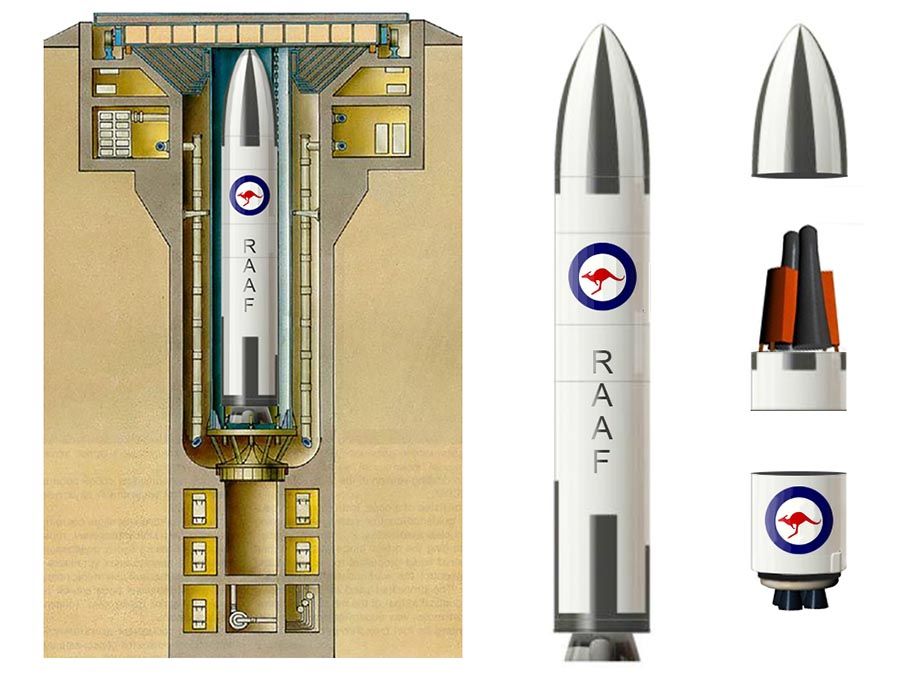
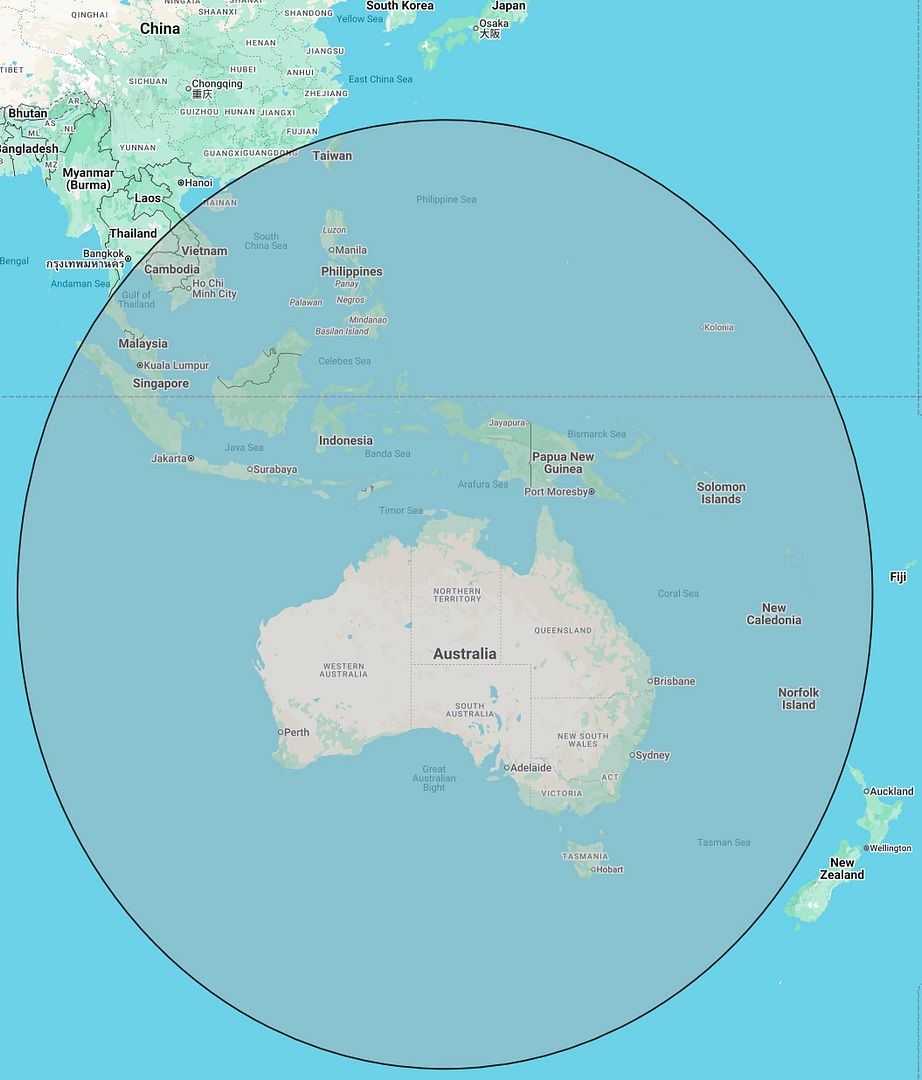
Above: The "Fist":
Left: One of Australia's Land based Polaris Intermediate-Range Ballistic Missiles
Right: Map showing typical range of Australia's IRBMsThe Polaris missiles weren’t the only weapons fitted with nuclear warheads in RAAF service. Approximately half the Nike Hercules missiles of No. 31 squadron (those at Tindal) were also equipped with a 20 kt warhead. The variants based at Darwin were only fitted with a conventional, albeit still powerful (502kg) warhead.
Finally, recognising that the Nike Hercules missiles represented a capability only able to be used in the most extreme circumstances, it was felt that a new, conventional weapon was also required to supplement, and indeed protect these strategic weapons. This would also come from the USA in the form of the MIM-23 HAWK missile system. No. 32 Squadron RAAF would be equipped with the type from 1971. These operated from multiple locations with between 3 and 4 detachments in operation, covering Darwin, Tindal, Butterworth in Malaysia and for a period of time RTAF Ubon in Thailand to support deployed RAAF CAC Sabres.
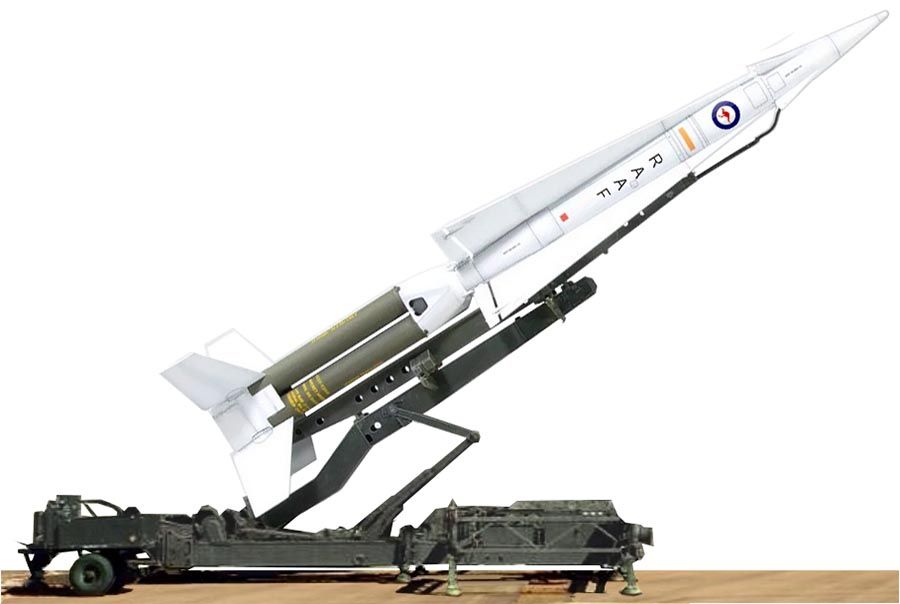
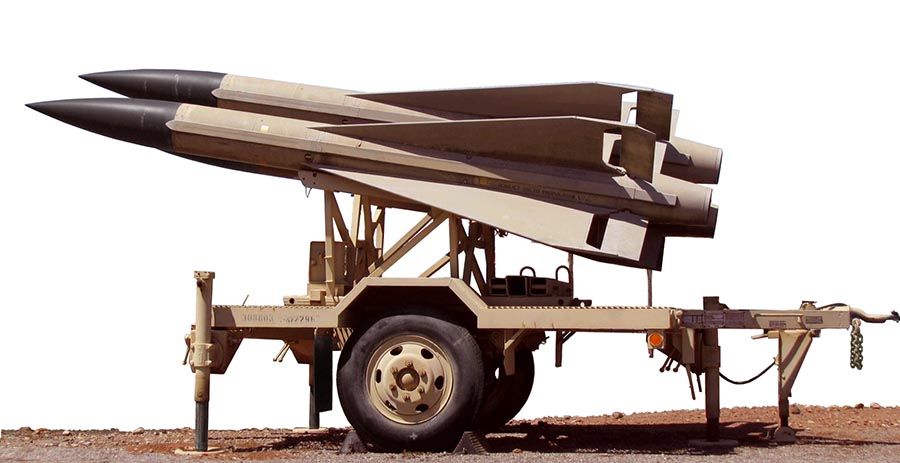
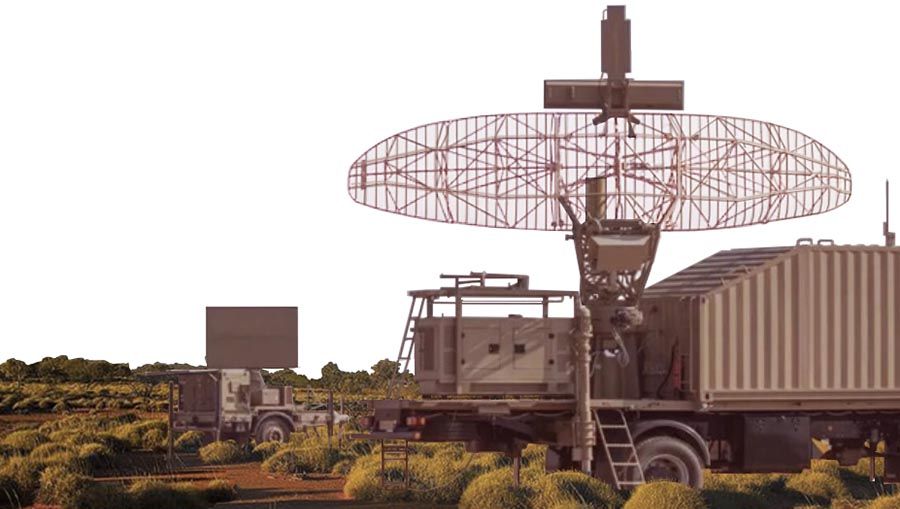 The Shield:
Top: RAAF MIM-14 Nike Hercules
Middle: RAAF MIM-23 HAWK - not only were these placed in fixed mounts, they were also used in mobile roles.
Bottom: Radars used to support HAWK: Trailer-mounted AN/MPQ-48 CWAR. In the foreground is the Pulse Acquisition Radar (the standard AN/MPQ-50 set but truck mounted for better mobility). The combination of Polaris, Nike Hercules and HAWK would continue in service until 1988 when Australia decommissioned its nuclear capability. For a period of time the HAWK missiles continued in service until these too were replaced by the MIM-104 Patriot missiles, with only No. 32 Squadron remaining active.



